
A Hive-aligned economic experiment
One more field for the same bees
hybla is a proposed Hive-derived chain testing stricter tokenomics: lower inflation, longer commitment, a disciplined treasury. Nothing asks you to leave Hive. This page is the argument.
The name
The ground where honey earned its name
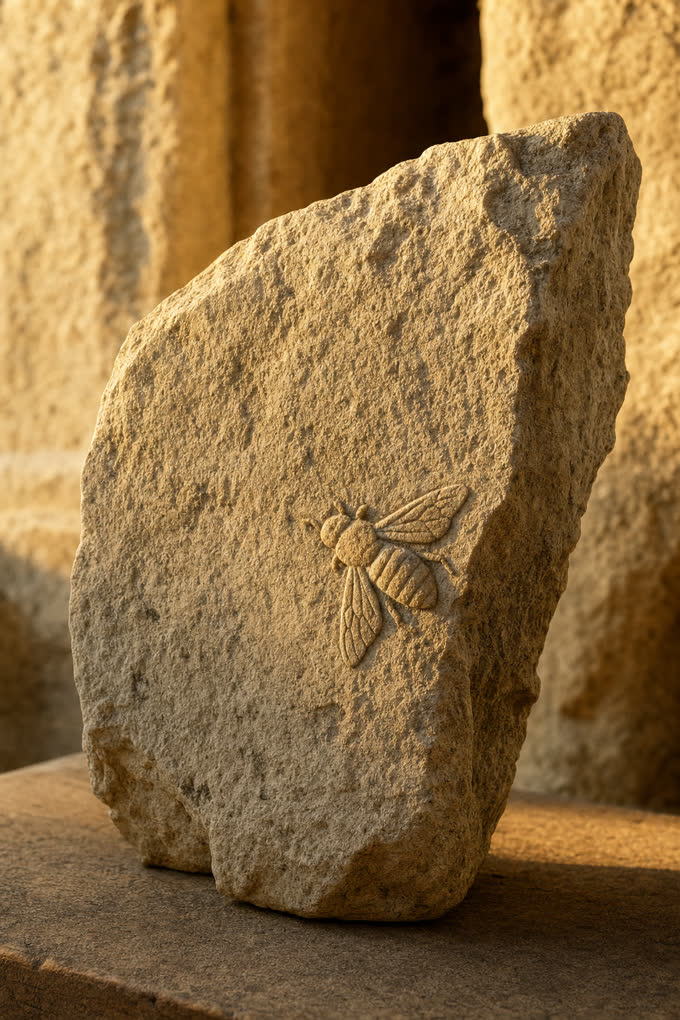
Hybla was a small town on the slopes of Etna, in eastern Sicily. Bees worked its wild thyme, and for two thousand years its honey was the measure other honey was held against. Poets reached for the name when they meant the finest. We chose it for kinship: the same first sound as Hive, the same family of bees. But hybla is not a hive. It is ground. Volcanic soil, limestone, long light. The claim is modest and specific: the same bees can make something worth more, given different ground.
The gap
Hive works. Its token has not kept pace.
Hive’s technology deserves its reputation. Fast blocks, feeless accounts, communities that survived hard winters. That is not the question. The question is value. After years of public spending and steady issuance, the token has struggled to hold what the ecosystem builds. Markets share the blame, and so do liquidity and access. But incentives matter too. When the token weakens, rewards thin, front ends struggle to earn, and good work stops compounding. We think value accrual should be a design goal, not a hoped-for side effect. That belief is testable. We would rather run the test than keep debating it.
The loop today
The loop the proposal is designed to break.
The loop by design
The loop hybla is built to run.
Inflation that does not create proportional demand is not investment. It is dilution.

The branch
A branch beside Hive, not a split from it
Nobody is asked to leave. Front ends keep posting to Hive. Communities stay where they are. A post goes to Hive, and the same post can also go to hybla: one more destination, one more economy underneath the same work. Hive itself began as a branch, cut by people who believed a system had drifted. We follow that lineage in a quieter key. If Hive’s model succeeds, everyone here gains. If hybla’s model works better, there is another path. If both bear, better still. The only losing move is waiting for the same incentives to yield different fruit.
A branch, not a betrayal. A hedge, not an exit.
The mechanism
One post, two fields
A front end that opts in broadcasts the same post twice: to Hive, exactly as today, and to hybla, one more destination behind the same button. Your account, your audience and your communities do not move. What changes is the economics underneath the work.
If hybla proves nothing, you lost nothing. If the ground is good, the same work grew twice.

The ledger
Six rules, written before the first block
An economy is a set of promises, and promises are only worth what they cost to keep. These six are hybla’s, written before the first block and kept in code. Each trades a little convenience for a lot of confidence. The working group sets the final numbers, in the open. The direction does not move.
-
Lower inflation
A materially lower target than Hive, held. Rewards stay scarce enough to mean something, and holding becomes a rational act.
-
A 104-week power-down
Two years to exit stake. It filters for people who think in seasons, and tells them everyone else does too.
-
Treasury spending earns its quorum
A vote against weighs four times a vote for, nothing funds below the return proposal, and daily outflows are capped at half a percent of market cap. Milestones and reporting, not entitlement.
-
Front ends earn by design
Beneficiary shares, routing incentives, onboarding rewards. The apps that bring users capture a designed share of the value they create.
-
No universal airdrop
Ownership is bought, earned, or transparently vested for real work. Copying Hive’s stake table would just replay the economy under test.
-
Rewards pay contribution, not activity
Curves shaped to resist farming and whale weight, so the pool flows to work other participants genuinely value.
The treasury
The treasury learns to hear no
Hive’s treasury only counts support. If a proposal troubles you, you can decline to vote for it, and once that proposal has friends enough, declining moves nothing. The sketch on hybla’s table is precise about the fix, because vague treasury rules are where the drift begins. A vote against exists, and it carries real weight. From there, funding passes three gates.
-
Beat the bar
Nothing funds below the return proposal. The floor is immune by design and cannot be voted away.
-
Hold the room
A vote against weighs four times a vote for. Small grudges cannot unseat honest work; a real objection, carried by real stake, can. Support that cannot carry the weight does not carry the money.
-
Fit the day
Total outflows are capped at half a percent of market cap per day. When the market falls, spending falls with it, so treasury outflow can never grow into a larger share of a shrinking market.
And the treasury itself starts the way everything here starts: empty. Hive’s fund began full, seeded by the stake the chain inherited. hybla’s fills drop by drop from issuance, a tenth of a budget that is itself held under ten percent, so the fund earns its outflows before it makes them. The vote-against sketch already runs as code behind a test hardfork, tests passing. The final numbers, like every number here, get set by the working group in the open.

Net approval, illustrated
Support fills the bar; opposition eats back into it. What remains is net approval. Four-to-one weighting and the 75% line are the same rule said two ways: opposition above a quarter of support tips the scale. The return proposal sits outside the gauge entirely: it is the cutoff itself, and cannot be voted down.

Not this
What hybla is not
- Not an attack on Hive.
- Not a migration. Communities stay where they are.
- Not a quick clone built for one cycle.
- Not an insider allocation with hidden advantages.
- Not a claim that Hive has no value.
- Not a promise that different tokenomics must succeed.
- Not a ninja-mine. No head start that was not earned in the open.
It is an experiment, run in the open and priced like one: contained downside, shared evidence, no obligation on anyone who prefers to watch.
The proof
What would prove the ground is good
Success here is not a candle on a chart. Price matters, but it arrives late, after the real signs, and the pass conditions get written down before launch so the experiment can fail in public. The real signs are behavioral. People lock stake for two years without being paid to pretend. Front ends plug in because the math works, not out of loyalty. Treasury proposals arrive with return estimates attached. And Hive gets something free either way: evidence of what these incentives do when they leave the whitepaper and meet weather.
- Front ends integrate because the economics work.
- Powered-up stake grows, and stays powered up.
- Treasury spending is judged by expected return.
- Rewards drift toward work, away from farming.
- Hive itself borrows what proves out.


The invitation
The working group comes before the chain
Nothing launches yet. The first step is a working group, small and committed, doing unglamorous work in public: supply and issuance, the power-down schedule, reward curves, treasury rules, front-end incentives, vesting, the launch itself. A chain’s credibility is poured at the foundation and cannot be patched in later, so this stage will be slow on purpose. Every decision gets published with its reasoning. If you have spent years on Hive and still believe the technology can carry more value than it holds, there is a seat for you.
No ninja-mine. No hidden stake, no free head start. Whatever anyone holds is bought, earned, or vested in the open, under one rule for all. The ground opens for everyone on the same morning, and what grows is grown together.
- Developers who know Hive
- Front-end operators
- Witness and infrastructure operators
- Investors seeding early liquidity
- Treasury and governance designers
- Creators, curators, community leaders
Nothing to buy yet. Nothing leaves Hive. Bring your skepticism.